English
 Polski
Pear bud weevil on 5 hectares, but only 1 hectare sprayed: how Peter Minnaard manages his orchard tree by tree
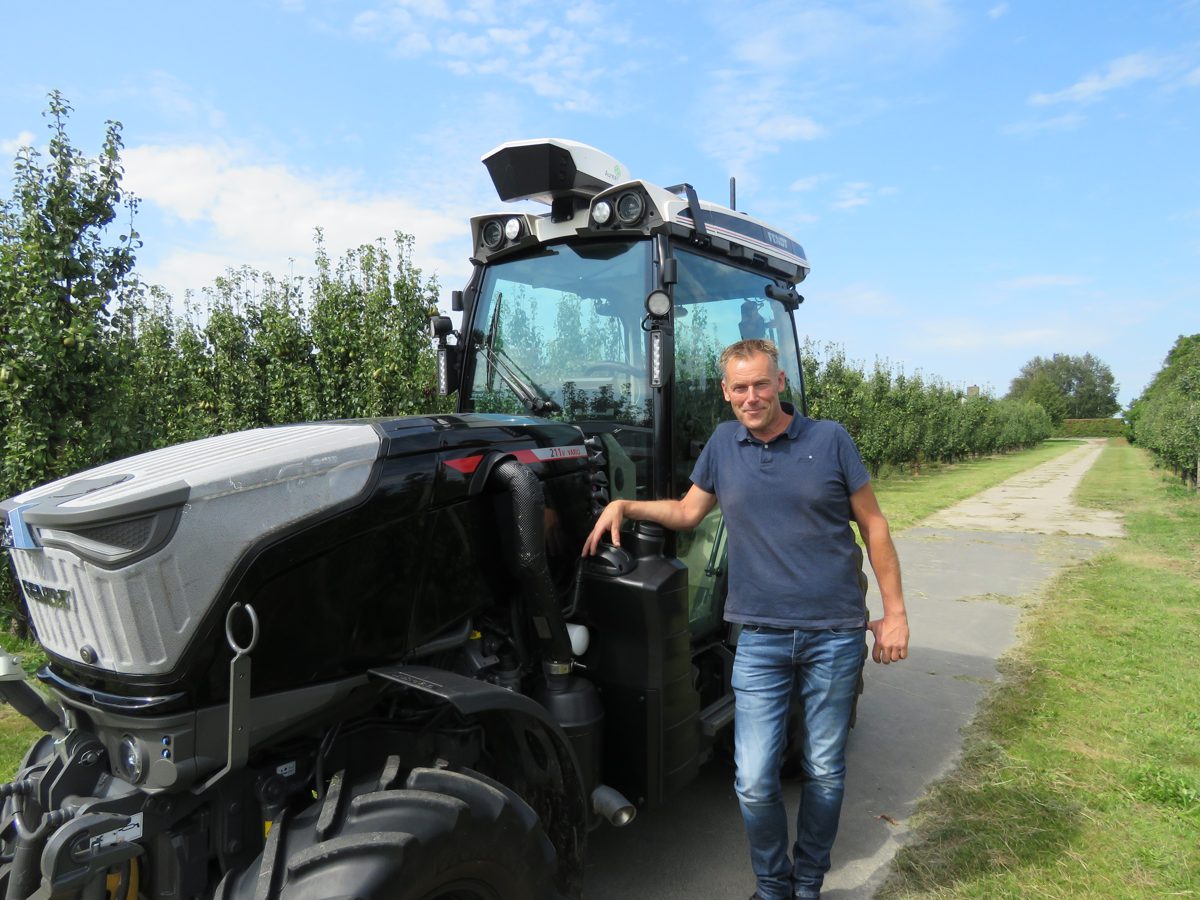
Five hectares of pears with pear bud weevil, yet Peter Minnaard only had to spray one. That is 80% less crop protection product, in his first season with TreeScout. Peter grows 16 hectares of Conference pears and one and a half hectares of Elstar apples in Dronten, the Netherlands, on a family farm that his son will most likely take over. How did he end up with TreeScout, and what did the first year bring?
Growth differences after the 2012 frost
The frost of 2012 left deep marks on the orchard. Many trees were lost and replaced, so young trees now stand between older ones. “Because of that, we got more and more growth differences in those blocks,” Peter explains.
That makes a uniform approach difficult. A mature tree needs something different from the young tree replanted next to it. About root pruning a replanted tree, Peter says: “You do not want to cut that one, because it still needs to grow for a while.”
Every tree in view, while you simply do your work
Peter came to TreeScout through his neighbour, who had been using it for some time. What Peter saw there, he wanted for himself. “Then we thought: we can do it even better, even more precisely.”
TreeScout is connected to Peter’s tractor and sprayer through ISOBUS. The camera comes along on every run and records how each individual tree is doing. Peter does not have to do anything extra for it.
“Spraying and measuring at the same time.”
Peter Minnaard
Pear bud weevil: 80% less product
In the pears, the TreeScout blossom maps showed circles with little or no blossom: spots with pear bud weevil. Peter turned those directly into a task map. “It actually covered an area of five hectares, but we only had to spray one hectare. That is a nice saving.”
Because he only sprayed where the weevil actually was, he used 80% less product. Peter is not the only one: at Vogelaar Fruitcultures, pear bud weevil also turned out to sit in hotspots, and only a small part of the block needed treatment. Read that story here.
Elstar: tailored thinning with uneven blossom
“The block blossomed very unevenly, from full bloom to empty trees,” says Peter. With a task map based on the blossom measurement, he could thin the full trees in a targeted way and leave the empty trees alone. “We were still able to spray the full trees to measure. We actually had no hand thinning hours after that.”
On the trees that were not sprayed, all blossom turned into apples. That gives slightly more clustered fruit, but the apples are there.
Pears: targeted fruit set and thinning
In the pears, Peter also made task maps based on the blossom maps. Trees with little blossom received an extra fruit set treatment, while trees with a lot of blossom were sprayed for thinning.
On blocks that normally need around 120 hours of hand thinning per hectare, no hand thinning was needed this year. Peter stays down to earth about it: the hours were not counted, and it was a year with little thinning work across the board. “Whether that is entirely down to the camera or not? No idea, but it is a start.”
Looking ahead
After the first season, Peter is “still very satisfied”, and he sees more possibilities for TreeScout. Detecting pests and diseases appeals to him most: “Insect detection, disease detection, I do see a future in that.”
What can site-specific work do for your farm?
Every farm is different. Let us calculate what TreeScout can mean for your orchard, from blossom thinning to targeted spraying against pear bud weevil.
Read more about